

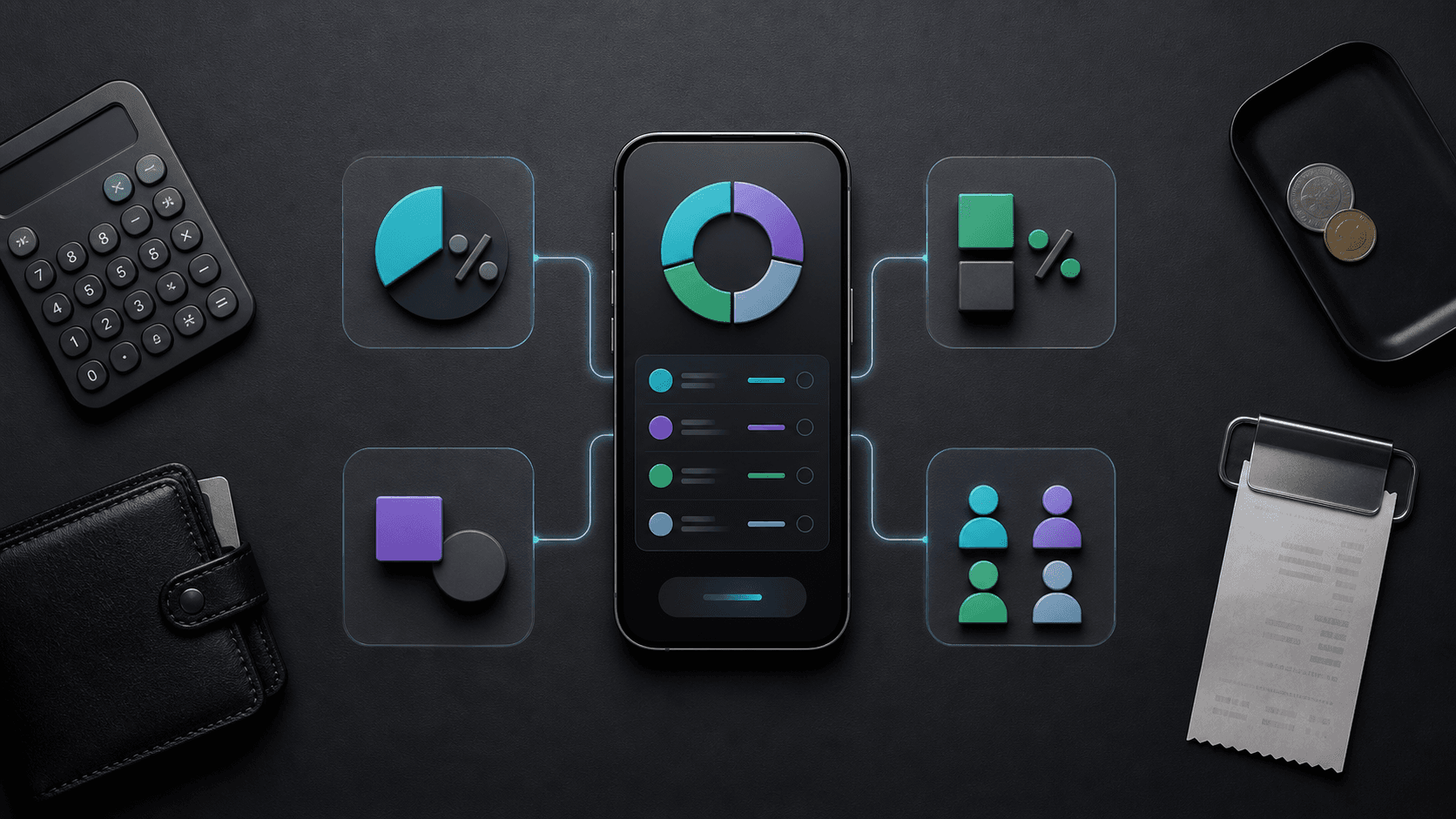
 EqualPercentageShares · Exact
'Split the bill' can mean four different calculations. Equal splits are quick, percentages reflect an agreed ratio, shares handle different levels of use, and exact amounts reproduce what each person consumed.
Choosing the right method before entering the expense prevents rounding problems and arguments later. Here is how every method works, with simple examples.
Equal split: one total divided by everyone
Formula: total cost ÷ number of participants. A ₹2,400 taxi package shared by four travellers is ₹600 each. Use equal splitting for costs everyone benefits from similarly, such as accommodation, WiFi or a group taxi.
Before dividing, decide whether children, guests or people who joined for only part of the expense count as full participants.
Percentage split: use an agreed ratio
Formula: total cost × each person's percentage. A ₹30,000 rent split 60/40 becomes ₹18,000 and ₹12,000. All percentages must add to 100.
This is useful for couples splitting by income, roommates assigning different room values, or a business team allocating costs by department budget.
Share-based split: assign relative weights
Formula: total cost ÷ total shares × each person's shares. For a ₹3,000 cost with shares of 2, 2 and 1, each share is ₹600; the participants pay ₹1,200, ₹1,200 and ₹600.
Shares are easier than percentages when usage differs naturally — adults and children, full-trip and weekend guests, or larger and smaller rooms.
Exact amounts: enter each person's real cost
Assign a specific amount to every person, making sure the values add to the receipt total. This method is best for restaurant items, event tickets at different prices, or shopping where purchases are clearly individual.
Remember to allocate shared fees, discounts, tax and tips. A common error is assigning the visible items but leaving the payer to cover the receipt's remaining charges.
Which splitting method should you choose?
- Use equal when access or consumption is roughly the same.
- Use percentages for a stable financial ratio such as income or room value.
- Use shares when people participated at different levels.
- Use exact amounts when the receipt clearly identifies individual consumption.
- Use SplitEase to mix methods across expenses while keeping one live group balance.
Frequently asked questions
How do you split a bill by percentage?
Multiply the total by each person's agreed percentage and confirm all percentages add to 100. For ₹10,000 split 70/30, the shares are ₹7,000 and ₹3,000.
What does splitting by shares mean?
Shares are relative weights. Add all shares, divide the total by that number, then multiply by each person's shares. It is useful when some people should pay half or double another person's amount.
What is the best method for splitting shared expenses?
Use the simplest method that reflects real benefit or consumption: equal for common costs, percentage for an agreed ratio, shares for different participation, and exact amounts for itemized purchases.
Put this into practice in 2 minutes
Create a free SplitEase group, invite your people, and let the app handle the math from the very first expense.
Start splitting free